How to Avoid Airline Checked Bag Fees (Part 1)
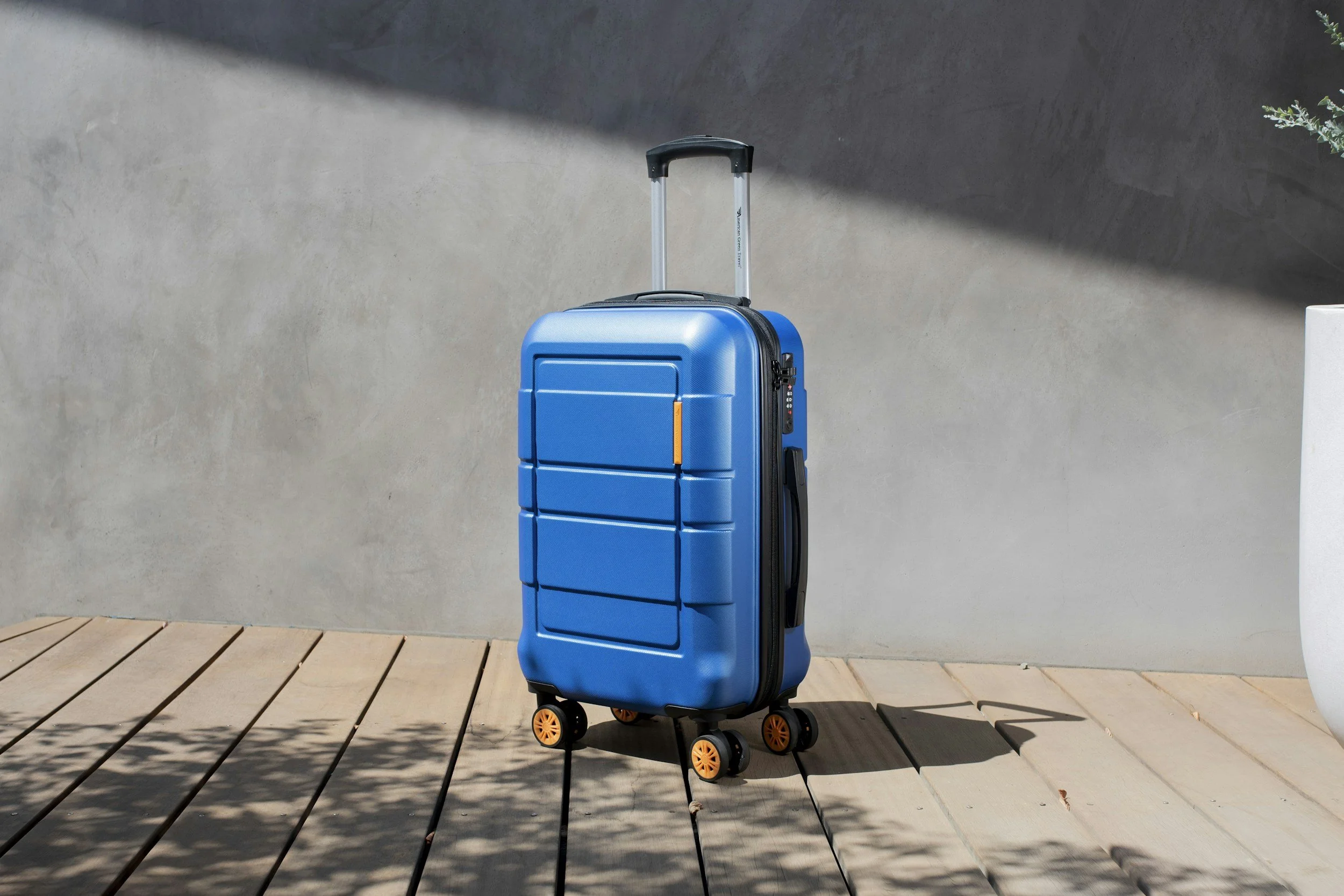
Image sourced by American Green Travel @americangreentravel
In January, I flew from LaGuardia Airport (LGA) New York City, to Miami International Airport (MIA) for a business conference.
I chose JetBlue because the flight times were the most convenient. In addition, I have a bunch of TrueBlue frequent flyer miles. When it’s practical I fly JetBlue to accumulate more frequent flyer miles – JetBlue TrueBlue Points and Perks to get free airline tickets.
What’s more, the airfare was attractive, or so I thought.
Although the particular airline doesn’t really matter.
My stuff included my backpack; a thin, polyvinyl garment bag; and my carry-on rollaboard suitcase.
I thought I could bring onboard one personal item which I considered to be my backpack; and the garment bag and my rollaboard suitcase and the backpack, which was pretty small. Nope.
When I got to LaGuardia Airport, JetBlue explained that I had three bags, Not two. Lovely!
Yippee!
While I don’t have perfect eyesight unfortunately, seemed to me that the garment bag wouldn’t take up all that much space in the overhead bin. And I could probably even sneak it into the closet up in first class.
I suppose that many do, but it didn’t seem practical or feasible to stuff my backpack into the garment bag to get through TSA airport security on the cheap. Fight fire with fire?
JetBlue charged me $40 for the first checked bag fee and if I checked a second bag, $60. You have probably endured this pain.
So what seemed like discounted airfare was far from that. Especially after having to pay an extra $40 Each Way for airline baggage fees! Ouch!
Needless to say, the “pain” didn’t hit until I was well into the purchase process.
This story is pretty much universal to all US domestic airlines.
According to the U.S. Bureau of Transportation, in 2022 passengers coughed up approximately $6.8 billion in total airline checked baggage fees.
$6 to $7 billion in fees to the airline industry every year. Good work if you can get it.
I highly doubt the airline industry will be eliminating check bag fees anytime soon. Frankly, not sure I would give them up either.
Airlines charge checked baggage fees based on the number of bags you bring and the weight of your suitcases.
Currently, most U.S. domestic airlines set a weight limit for checked bags of 50 pounds (23 kg).
But be sure to check each airline’s rules if you might reach or exceed the weight limit.
If you want to weigh in, Amazon sells a luggage scale for $10 to $15.
So, the key to minimizing or avoiding checked baggage fees is to minimize the weight of your suitcase and fit everything into one suitcase instead of two or into two suitcases instead of three.
If we can’t beat the Airline Industry, let’s buckle up, fight fire with fire and pack these 22 ways to avoid airline check bag fees or at least reduce airline them:
Before you book an airline trip and purchase a ticket, check the airline’s carry-on baggage rules.
Get a handle on the airline’s luggage weight and size rules.
When your air travel includes multiple stops and layovers on different airlines, study each airline’s rules regarding carry-on baggage and carry-on baggage fees.
Regarding the maximum size and dimensions of the suitcase, the airlines conform their rules to the FAA’s rules (U.S. Federal Aviation Administration).
But foreign airlines’ rules may differ and some foreign airlines and international flights may give you a free checked bag.
Be sure to check each airline’s rules.
2. Consider purchasing a lightweight suitcase.
But check the product ratings so you don’t purchase a low quality, flimsy suitcase, which might rip in transit.
3. Simply put, pack lighter; bring less.
Bring clothes and outfits that you can mix and match. Maybe you can wear a shirt or blouse with slacks or a skirt, etc. By bringing say two or three shirts and one pair of pants, you reduce the number of outfits you bring and therefore reduce the weight of your suitcase.
Wear ‘universal clothing’ where the garments go with all or most of your outfits. My colleague Tom wears white dress shirts every day and a necktie when ties were in style. He used to say, “White shirts go with anything and everything.” As a slave to fashion, I can relate.
For short trips – one or two days – I bring only two pairs of shoes. Typically, I bring one pair of shoes and my sneakers so I can work out in the fitness center.
Bring washable clothes. While probably not a ton of fun, pack less and if you need to, do a load of laundry at the hotel.
Bring along a few packages of travel-size detergent. If you happen to bring liquid detergent instead of powder and you’re concerned about the liquid spilling out onto your clothes (I would be), pay up at the hotel’s convenience store. If you rent a car, most likely there’s a supermarket, CVS or a convenience store pretty much everywhere.
◊◊◊<§>◊◊◊<§>◊◊◊<§>◊◊◊<§>◊◊◊<§>◊◊◊<§>◊◊◊
Looking to save more money for vacations and travel?
The Secret is to save money and build wealth so you have more time and money to travel to fun and exotic places.
Click here!
◊◊◊<§>◊◊◊<§>◊◊◊<§>◊◊◊<§>◊◊◊<§>◊◊◊<§>◊◊◊
Borrow your friend’s jacket or sweater.
Suppose you live in a warm climate and you’re going to visit your friend Becky who lives in the mountains where it’s cold.
Perhaps Becky has an extra sweater or down jacket lying around that you can borrow.
Wear heavy and bulky clothes to reduce the number of clothes you pack to reduce the weight of your suitcase and hopefully reduce the number of suitcases you have to bring.
Examples include an undershirt, Long Johns underwear, sweatshirt, sweater, sports jacket, blazer, vest, sweatpants, workout clothes, boots, hiking boots, pumps, high heels, jackets, etc.
If one pair of shoes is lighter or bulkier than another, wear the bulkier shoes. Pack the lighter pair.
If you’re bringing pumps or high heels or going hiking, when practical wear your heels, hiking boots or other shoes that take up a lot of space in your suitcase.
Pack more efficiently – in other words stuff your suitcase to the gills – so long as you don’t exceed the airline’s weight maximum.
First, pack your slacks at the Very Bottom of the suitcase so the pant legs drape over the edge of the suitcase.
Pack your sports jacket or blazer flat, on top of that. Drape the sleeves over the edges of your suitcase.
Next, pack your other clothes on top of the slacks and the jacket.
Pack smaller items – for example, underwear and socks in your shoes. To keep them clean, put the clothes in a plastic bag and then your shoes into plastic bags.
When you’ve packed everything – or everything that fits – fold the pant legs of your slacks and your jacket sleeves over the clothes. This helps reduce wrinkles.
Let’s take off next week when we unpack 17 more ways to eliminate check bag fees.
Fly safe!
See you next week.
Arthur VanDam, CPA MBA
P.S. To Save More Money for Vacations – Click here.
Budget and Grow Rich® – ISSN: 2992-9296 – USA International Standard Serial Number (ISSN)
Disclaimer: OH and Please Remember, we are Not financial advisors, financial planners, attorneys or accountants and are Not providing any specific financial, tax, accounting or legal advice here. Be sure to conduct your own due diligence and consult your own professional advisors to get sound professional advice that’s specific to your financial and personal circumstances, risk tolerance, time horizon and investment goals and objectives among other key factors!

10 Easy Ways to Accumulate $1,000,000 Now!
The Often Overlooked Secrets to Building Wealth
Commonsense how-to delivers a frank conversation with a rich uncle – a step-by-step wealth-building system that will help you build wealth like clockwork.

How to Succeed and Achieve Your Dreams!
Tired of the rat race?
To Succeed even bigger, greater and stronger, 10X your success – click here.


Budget and Grow Rich® is the original e-book guide to easy budgeting and wealth-building. Gain financial freedom and pour money into your pockets today and for years to come.
Finally, the proven roadmap to building wealth – how to make a personal budget that really works. Explained in plain English – easy to follow, practical steps. Since 1974, personal finance expert and author Arthur VanDam has used this system to organize his finances, manage his money and amass wealth. Now you can too. This straightforward guide tells all! Handy spending plan worksheet includes 14 categories that does it all. Practical tips and ways on how to create a financial plan and put your financial plan on auto pilot. Budgeting At Your Finger Tips will help You save more money, build more wealth, gain peace of mind and enjoy financial freedom.

Take your Business, Career & Life to a New Level with this Experiential, Immersive Live Event FREE!

How to Make Money in your Spare Time Writing Letters.